A Native to Nowhere: An Immigrant Story
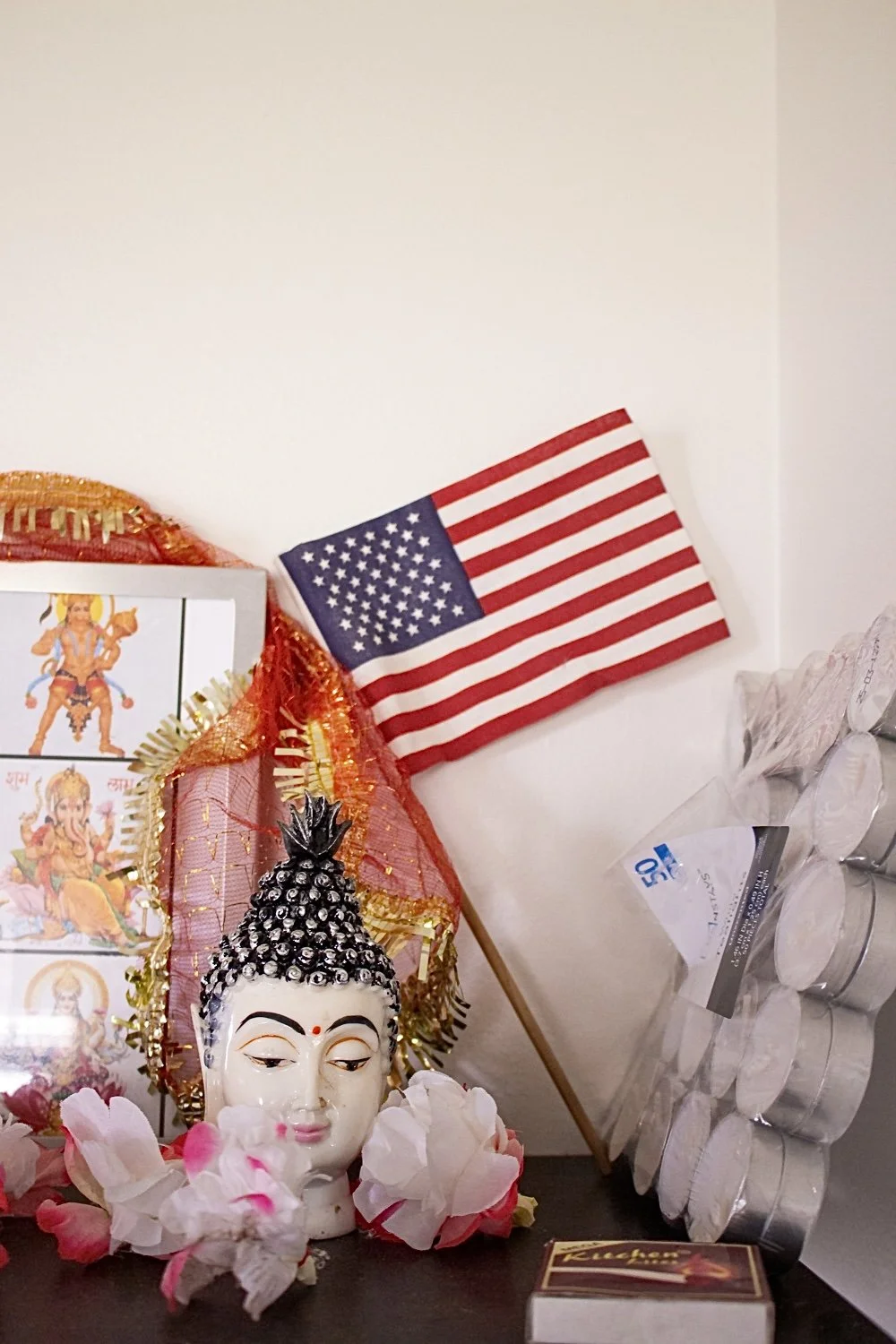
At 13, he said yes to moving from India to the U.S. Two months later, he was living in America, and has lived between both cultures ever since.
My name is Zoe Wooten, and I am an intern for Heartfelt Tidbits. Being here, I have learned about different paths of immigration and it has sparked more questions for my own immigrant friends. One friend really stuck out to me. I will call him Padu. What interested me about Padu was his pride with not only where he came from, but also in the United States. Right now, many Americans openly say they hate it here, they want to leave, and it’s an awful place to live. For me, his perspective has been a rare find. He’s not even a citizen, and yet, he might be the most patriotic friend I have.

I once asked, “How did it begin? How did your parents present immigration to you?” He said he was 13 years old. He was sitting on the rooftop of his Darjeeling home when his mother randomly asked, “Do you want to come to America with me?” He said yes. He wasn’t old enough to fully grasp the weight of what he was agreeing to, but he knew that he wanted to stay close to his mom.
Padu was born in 2002, and his mother moved to South India in 2007 while he stayed in Darjeeling with his father and grandparents. From 2008-2016, he only saw his mother in the winter. To live with her was an opportunity he couldn’t deny. He also knew that his dream of being a pilot would be most tangible in America. Moving was exciting and nerve-racking. He had never been out of the country before. For the first time to be a permanent change was beyond his comprehension.
To get to America, he had to get a dependent visa. To get it, they took a two-hour flight to another city where he was interviewed. Within 2 months of saying yes on the rooftop, he was living in America.
He remembers going up the Cincinnati CVG escalators when he arrived, but what he remembers more is his first day of school.
The first thing he saw was a line of cheerleaders welcoming everybody into the school, jolting him into thinking, Dang, it’s like the American high school movies. They told him to go to the gym, and so he searched for a typical gym with weights and machines. He couldn’t find it, but he found a tall white guy. He told him he was new and asked, “Where’s the gym?” He realized that the “gym” actually meant the basketball court. When he reached the gym, everybody had their phones out! Teachers were hyping the students up and cheering—this would never happen in India! It was such an expressive and relaxed environment. Nothing like the uniforms and controlled behavior he was used to. He spent lunch alone on the first day, but quickly throughout the week he started to find friends.
Things sounded so easy, so natural, so I asked him, “What was the hardest thing to adjust to?” and “Was there any help you wished you had?” He paused for a long while, and to my surprise, he said, “Nothing really.” He feels that he easily adapts to new places. He didn’t need anything beyond what was offered. He only wishes there were a better way to meet American kids. His school had all the immigrant kids together, which was great for meeting people in the same position, but broken English cannot improve broken English, and foreign culture cannot teach local culture. Social culture was a lot to learn.
He said that Americans are super friendly. Everyone feels extroverted. After a while, he found that a lot of it is fake niceness. When somebody is passing by and they say, “How are you?” They don’t actually care. However, it is still nice in a way, and the way people will talk to strangers standing in a line and compliment each other is not normal, and he likes it.
Padu is now 23 years old. He started college at 16 and graduated at 21 with a degree in aerospace engineering. He has a lot of college pride and even has his license plate customized to essentially be a free ambassador. He talks so nostalgically about his uni life, and says he misses those days, wishing sometimes to go back. While he lives an hour away for his post-grad job, he still drives back to Cincy every weekend to see his friends.

Knowing he moved at 13 and talks highly of both places, I had to ask, “Do you feel like you belong to one place more than the other? Does one feel more like home? Do you feel like a stranger in both? To yourself? To the people? You only know India from a child's perspective, but you don’t have the American childhood experience either. However, teenage and college years have created so much of who you are today. You talk about your American life the most.”
To this, he gave a weak chuckle, and his voice got quiet. “Where are you getting these questions?”
“Just curious,” I said.
“Nobody has ever asked me that. Yeah, it’s bittersweet. I live here, I know the culture, the lingo, the social aspects, the quality of life, the way of living. I am adjusted to here. But still, nobody would call me American. Even if I got citizenship, people will not call me American. They will look at me and say, ‘oh Indian guy’. But if I go to India, yes, I was brought up there, but my accent changes, my Nepali isn’t as good anymore. The way of living, the way of thinking is different. So they will say, ‘oh he is American’. You’re stuck in the middle. You’re not a native of either place.”
But this is not a matter of only being Indian or American. Darjeeling was once a part of Nepal but was overtaken by India. The culture is a mix of Nepal and India, so even in India, he would be between identities, too. While his personal culture is a mesh between many places, it’s not a stress on his identity. Nobody gives him a hard time about it. It is just a feeling. A fact of life. When he is flying into CVG and sees the Cincinnati skyline from Kentucky, that feels like home. Cincinnati gives him a home feeling, and Darjeeling gives him a roots feeling.
“Do you feel like a citizen?”
“Yeah! Just listen to how I talk about politics. I cannot even vote, but everything affects me because I live here, I pay the taxes, everything they (government) do affects me, so yeah. But I will never feel fully American either.”
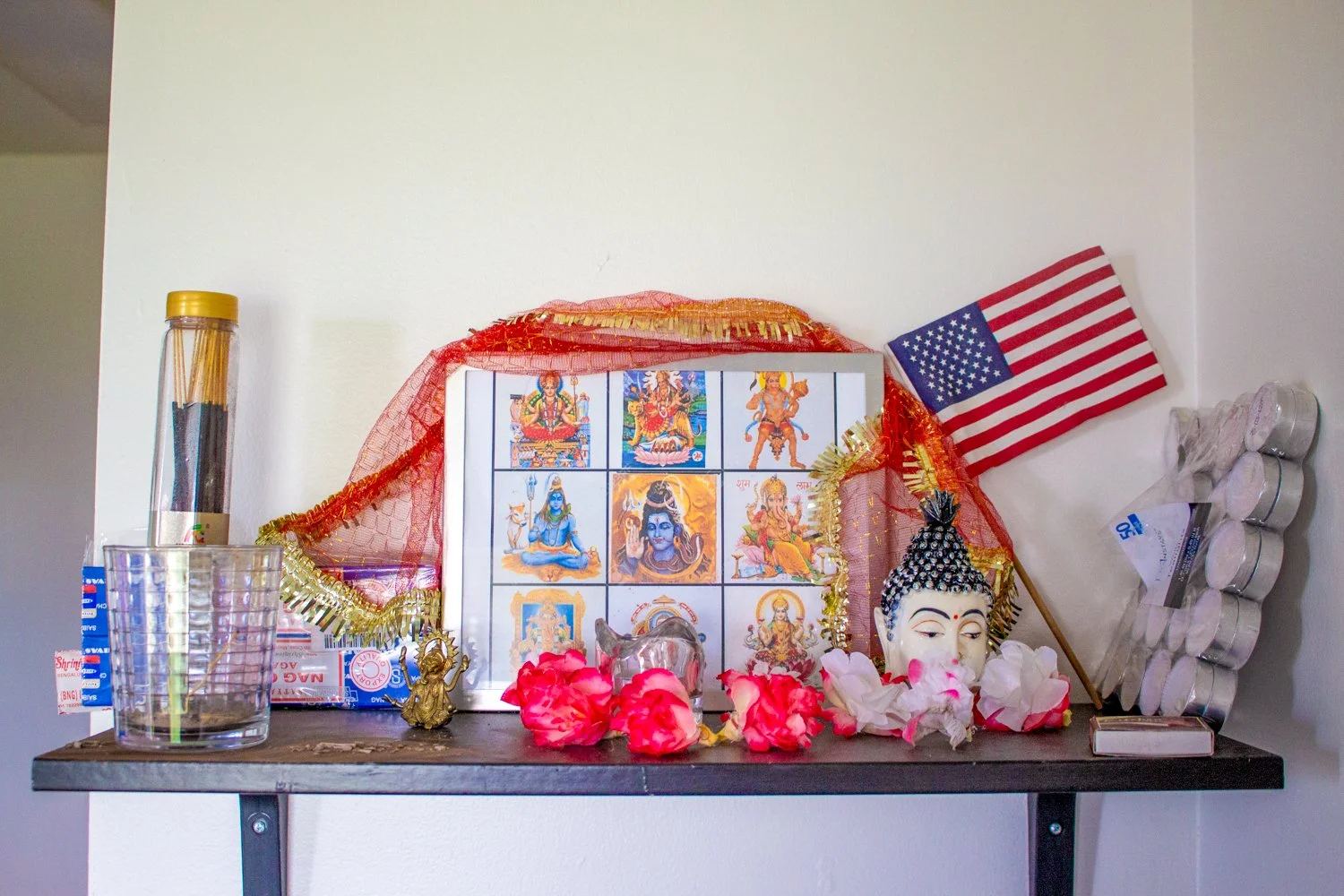
I asked if immigration has diluted his relationships back home, if he’s lost culture he wishes he still had. He said 100%. He’s not happy about that. It’s bad. He’s not good at keeping in touch with people so far away because of time zones and how intentional communication has to be. He doesn’t go to a Hindu temple or do as many celebrations. If his family were here, he thinks he would be more engaged, but they’re not here. He doesn’t talk to any of his old Indian friends, he’s not close with his cousins anymore, and he doesn’t talk much to his grandparents. His way of thinking is more forward, like an American, and less traditional, like an Indian. So yes, the physical distance has created relational and cultural distance too.
“What do you wish more people knew about immigration, emotionally or intellectually?”
“I wish people knew how lucky they are to be born in America.”
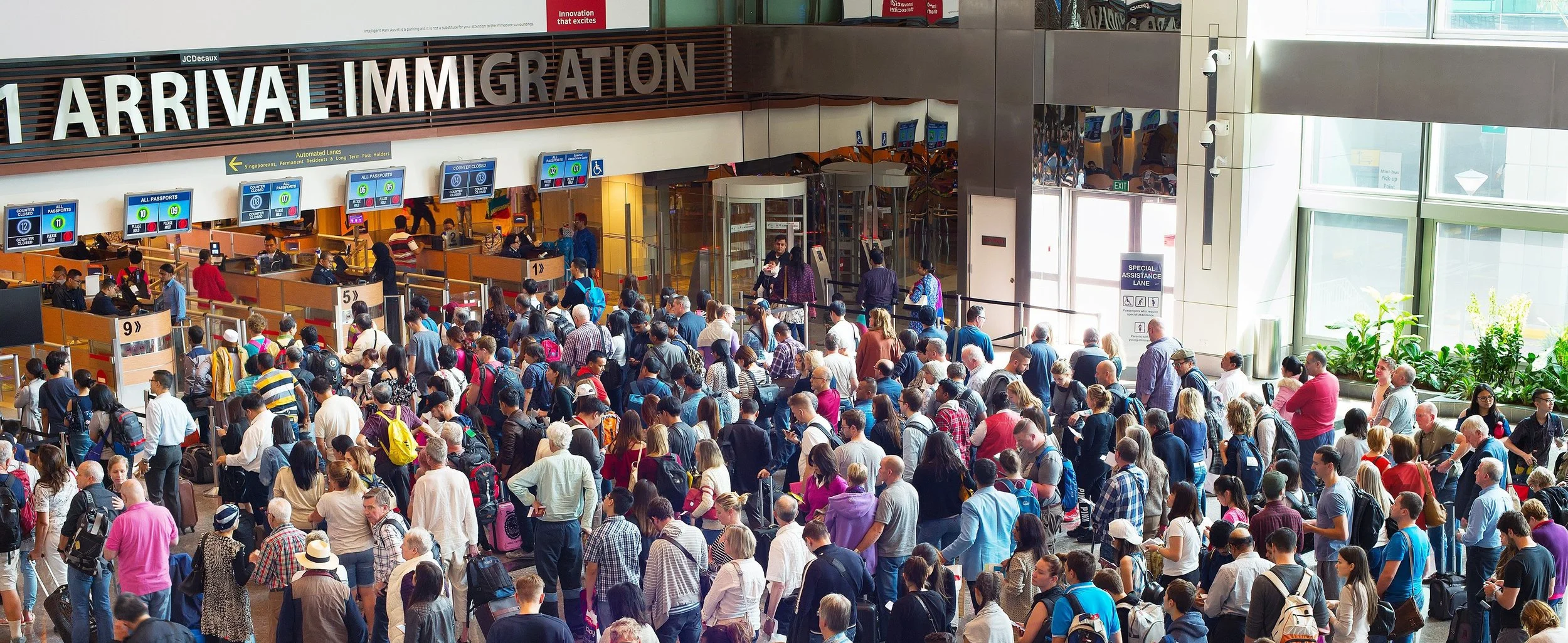
“There are so many people in the world who would love to come to America!” He thinks so many citizens take their citizenship for granted. When people say they hate it here, they want to move out, he can’t help but think, Then get out! Move! People wait decades to step foot here, and they are still not citizens. They just have a hall pass.
Illegal immigrants risk their lives and daily certainty. Legal immigrants sacrifice an incredible amount of time, pressure, money, and family connections. There are rules to follow when applying and processing for a visa, and there are always travel limitations. Many miss birthdays, weddings, funerals, and births for the sake of security. Once in America, visas can be denied for renewal even though their jobs, houses, cars, friends, and maybe family are all here. If their visa gets denied, they are screwed and back to square one. If you want to extend your visa, you can never leave the U.S. You cannot go back to your family. If you do, you have to go through the process to get another visa, which opens up more risk of getting denied.
There are thousands of international students in colleges, but he is certain it would be next to nothing if it did not give them a chance to work in America, to get a foot in, and have the opportunity to establish a life here. Once they graduate, they have two years to find an employer who will sponsor them, or they are sent back to their country. To have full security takes decades. It is draining in every sense–emotionally, financially, physically, mentally. To be born with a secured spot in the U.S. is an expensive and laborious gift. It is not a blessing to be taken lightly.
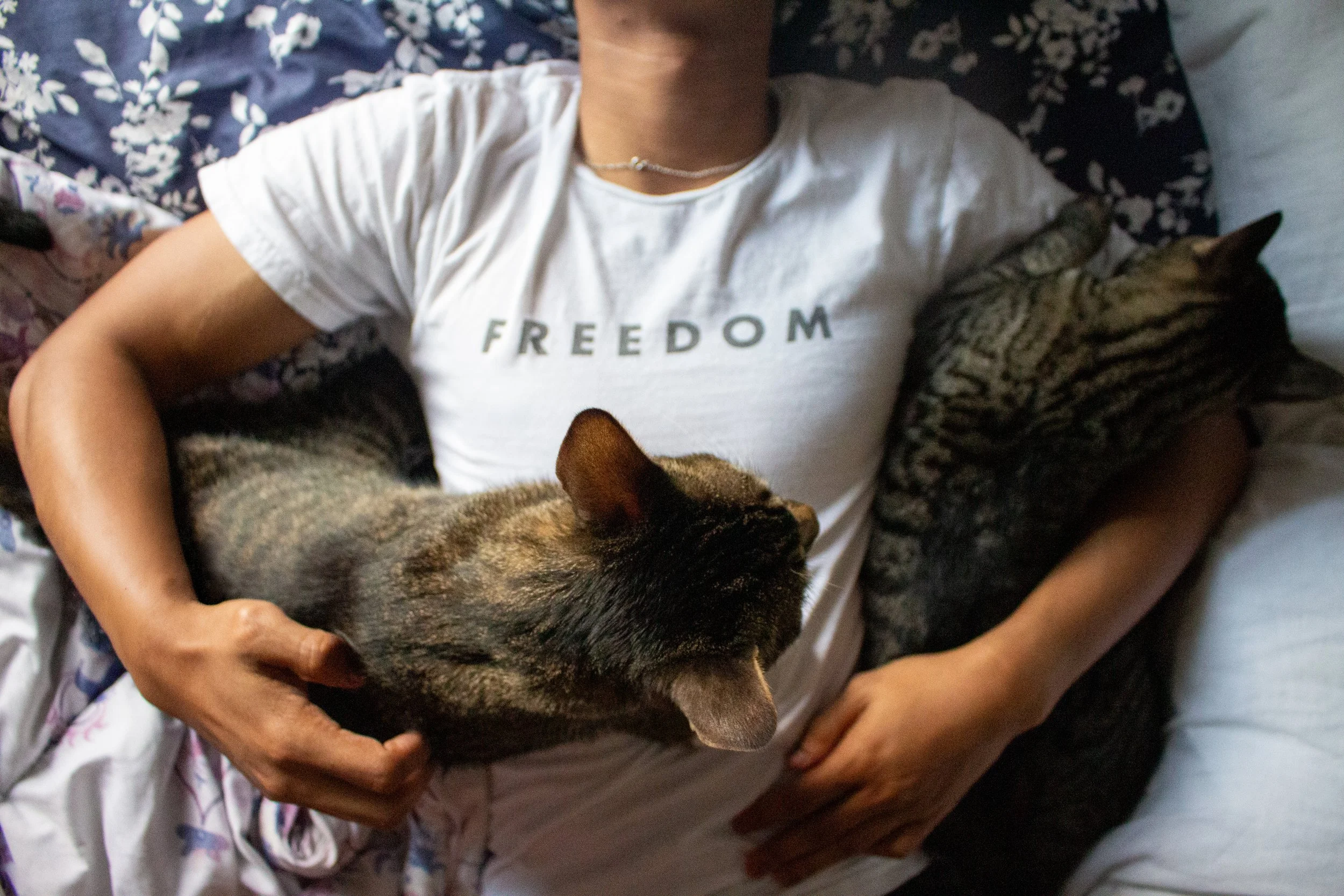
The thing he is most grateful for in America is freedom. It may sound cliché, but at 23, he has a great job, his own place, his own two pets, his own car, and he can travel wherever he wants, whenever he wants. In India, you cannot be 23 and have these things because the jobs will not pay enough.
He loves the diversity of America. He has friends from all over the world, and he has been able to learn so much about different cultures and their histories. There is more opportunity here, more variety, more choices, more convenience, more room for potential and exploration.
I started to ask about his dislikes. What has been the worst part of living in the U.S.? Would he change anything? He said the value of money. Everything is about money, and it really negatively affects people. Healthcare is a good example. The government doesn’t really care about the people, but neither does the Indian government, nor many others. People are also extremely divided over politics. There is political division in India, but it is nowhere near the level of American division. He doesn’t like lobbying, he would change the politics, and he would like to have caps on profits. As for the immigration side of living, I asked if he ever chooses not to do certain things in fear that it could hurt his chances of citizenship or put him at risk of trouble. “Not really.” There are certain things people may risk once or twice, but for him consequences can be harsher. Such as drunk driving, which is already really bad, but if he were to risk it and get caught, that is almost automatic deportation. It’s not jail or money or revoked license, it is everything.
But even with this, he said that there aren’t too many complaints. He didn’t answer as long or as intensely about what is bad or what he dislikes. He has so much more appreciation for the freedoms it has given him that the imperfections are just that, imperfections. Nothing can be perfect, and the negatives are outweighed by the positives.
The last thing I asked was, “Would you have changed anything?” He said, not at all. He is very happy with how his life has turned out.
While American life has created many branches of who he is, his roots remain in his home country. It’s a reality many immigrants live in, but one that few people stop to ask about.

After our talks and knowing him for a little while, the biggest difference I see in him versus my American friends, is that he maximizes his freedom. The way he travels is one obvious example. He strategizes his finances to support traveling to numerous cities and countries. He sees what he wants, what he needs. He will research it, strategize it, network it, and he will often get it. He had a plan to fund piloting school, and even though it’s probably not going to work out now, the fact that he is still trying to pursue a desire he had as a child, I find so sweet, as most people give up on their childhood dreams. Especially since that is part of why he came to America. I also know that he is not going to stop trying; he is just going to find a new plan. A plan B, then C, D, E, whatever, until he finds a way to get his pilot's license. He did a startup idea with a friend. He told me that almost every startup fails, but even if it does, they know that they at least tried.
If I had to pick one thing his friendship has taught me, it is that…